
Ipamorelin 10mg
$72.99
- 1 About Ipamorelin
- 2 Ipamorelin Mechanism of Action
- 3 Ipamorelin Research Applications
- 4 Ipamorelin vs GHRP-6 vs GHRP-2 Comparison
- 5 Ipamorelin Storage & Handling Guide (Research Use Only)
- 6 Frequently Asked Questions (FAQ)
- 7 What purity standard does Research Peptides maintain for Ipamorelin?
- 7.1 Are Certificates of Analysis available for Ipamorelin research batches?
- 7.2 How should Ipamorelin be reconstituted for laboratory research?
- 7.3 What storage conditions help maintain Ipamorelin stability?
- 7.4 Is Ipamorelin stable once dissolved in solution?
- 7.5 Why is Ipamorelin frequently used in neuroendocrine signaling research?
- 7.6 How does Ipamorelin differ from related research peptides such as GHRP-2 or GHRP-6?
- 7.7 Why do researchers sometimes compare Ipamorelin with peptides such as CJC-1295 or Sermorelin?
- 8 Certificate of Analysis (COA) & Quality Assurance
- 9 Scientific References
- 10 Regulatory Status & Legal Considerations (U.S.)
About Ipamorelin
Ipamorelin is a synthetic pentapeptide classified as a selective growth hormone secretagogue and ghrelin receptor agonist commonly investigated in endocrine signaling research. It was originally developed as part of a class of peptides designed to stimulate growth hormone release through the growth hormone secretagogue receptor (GHSR-1a). Because of its receptor selectivity and defined molecular structure, Ipamorelin has become a widely used research compound for studying peptide–receptor interactions within neuroendocrine regulatory systems [1].
Structurally, Ipamorelin is a short-chain pentapeptide composed of five amino acids designed to mimic functional aspects of endogenous ghrelin signaling while maintaining a simplified and stable peptide framework. The molecule incorporates structural modifications that help preserve receptor binding specificity while reducing susceptibility to rapid enzymatic degradation. These structural characteristics make it particularly suitable for controlled experimental environments where reproducibility and molecular consistency are essential.
In laboratory settings, Ipamorelin is frequently used in receptor-binding assays, cellular signaling experiments, and neuroendocrine pathway models that investigate hormone release mechanisms and metabolic regulatory processes. Researchers often employ the peptide in in-vitro systems to examine GHSR-mediated signaling cascades, intracellular pathway activation, and downstream molecular responses associated with endocrine feedback networks.
Synthetic Ipamorelin provides several advantages for experimental use, including structural consistency, reliable receptor interaction profiles, and improved stability compared with many naturally occurring peptides. These attributes allow researchers to study signaling dynamics and receptor activation patterns under controlled laboratory conditions.
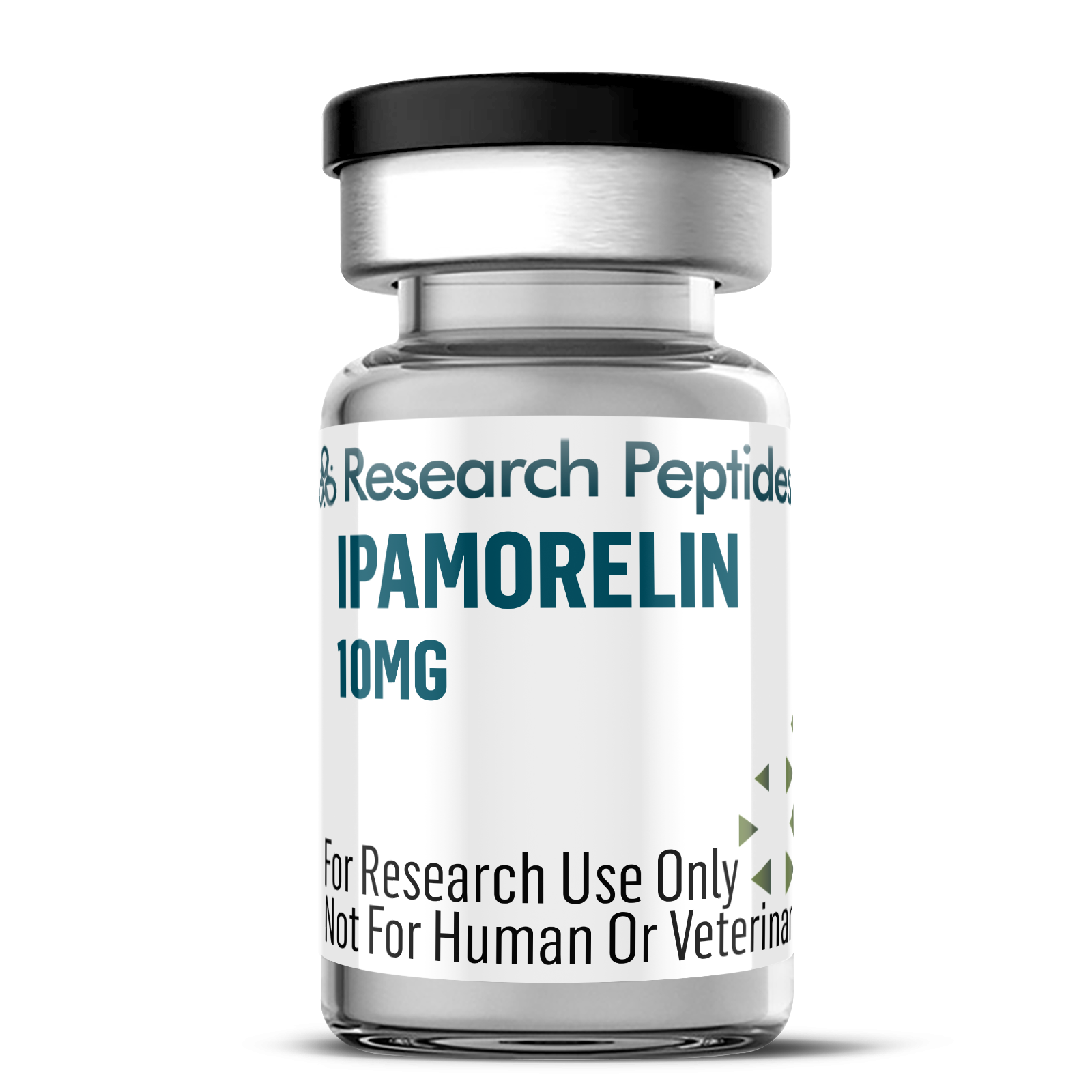
Research Peptides supplies Ipamorelin (10 mg) as a research-grade compound synthesized via advanced solid-phase methods and purified by HPLC to ≥99% purity, with in-house HPLC and MS testing and verification to support rigorous research requirements.
Ipamorelin: Purity and Quality Control
Purity is a critical variable in peptide research. Impurities, such as residual solvents, synthesis byproducts, or peptide fragments, can interact with biological systems independently, introducing confounding variables that compromise data integrity and reproducibility. In receptor binding studies, cell-based assays, or signaling pathway investigations, even trace contaminants may produce off-target effects that obscure the compound’s true activity profile.
Using research-grade Ipamorelin with a purity level exceeding 99% ensures that observed experimental outcomes can be attributed to the compound itself, supporting more reliable, interpretable, and publishable results.
Ipamorelin (10mg) supplied by Research Peptides is produced using advanced peptide synthesis technologies designed to ensure this level of purity with reliable consistency from batch to batch. This is possible with advanced solid-phase peptide synthesis (SPPS), a widely adopted method for assembling complex peptide sequences with high accuracy.
Following synthesis, the peptide undergoes precision high-performance liquid chromatography (HPLC) purification to isolate the final compound and remove residual synthesis byproducts.
After synthesis, each production batch is subjected to analytical verification to confirm molecular identity and purity. Analytical HPLC is used to evaluate the peptide’s purity profile, while mass spectrometry provides confirmation of molecular weight and sequence integrity. Together, these analytical methods help verify that the compound meets a ≥99% purity threshold and maintains the expected molecular structure required for controlled laboratory experimentation.
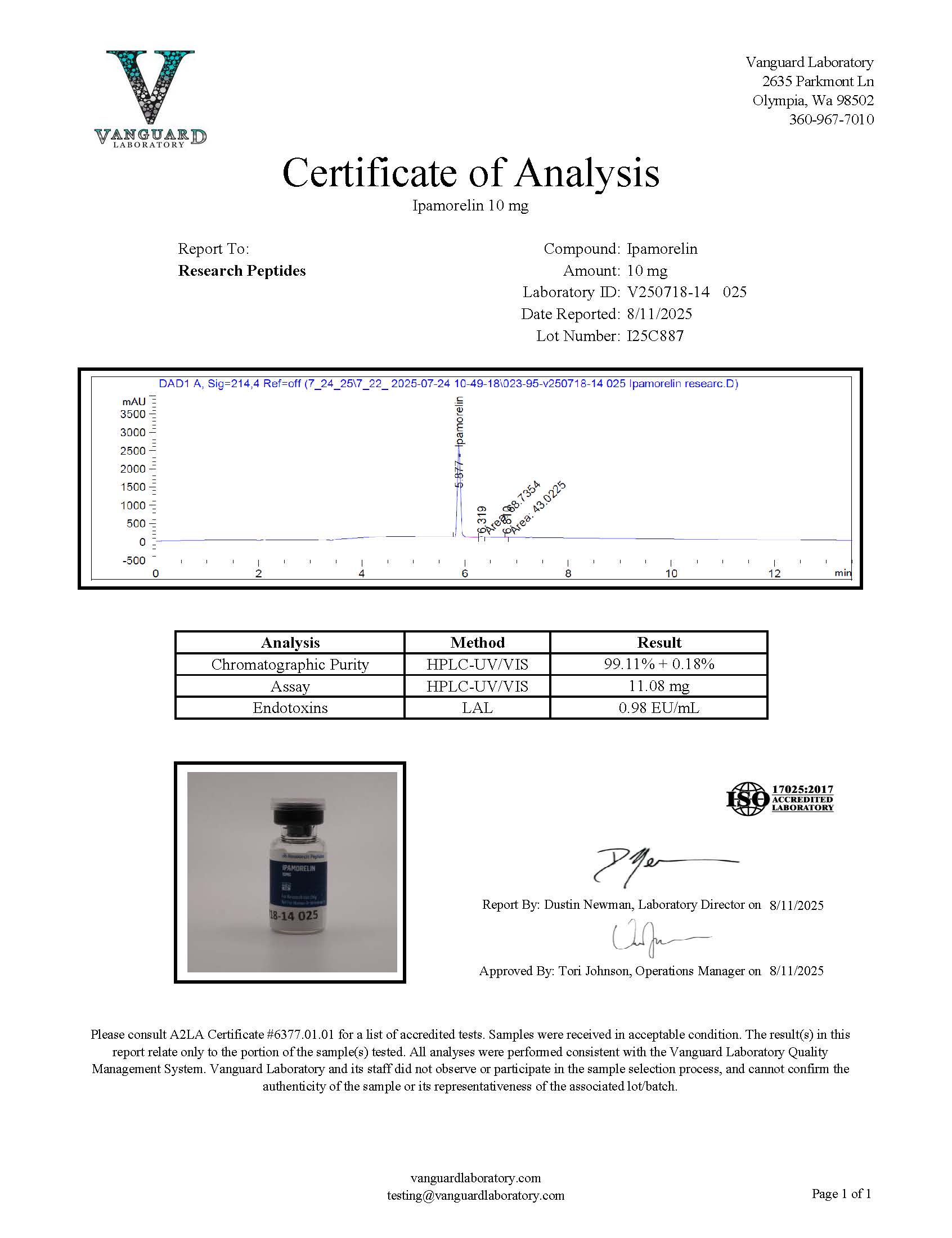
Research Peptides also provides batch-specific Certificates of Analysis (COA) that document these analytical results, offering researchers transparent quality verification for laboratory records and experimental documentation. Through consistent manufacturing standards, analytical testing, and dependable U.S. shipping, Research Peptides supports independent researches as well as institutions seeking reliable supply of high-quality research materials.
Ipamorelin Mechanism of Action
Ipamorelin functions primarily as a selective agonist of the growth hormone secretagogue receptor (GHSR-1a), a G protein–coupled receptor involved in the regulation of growth hormone signaling within the neuroendocrine system.
In research, activation of this receptor has been observed to initiate intracellular signaling pathways associated with hormone secretion and metabolic regulation. These interactions have been characterized in receptor-binding assays, cell culture experiments, and preclinical animal models investigating endocrine signaling dynamics.
Primary Target Binding and Selectivity
Ipamorelin binds to the growth hormone secretagogue receptor type 1a (GHSR-1a), the same receptor targeted by the endogenous ligand ghrelin. This receptor is primarily expressed in the anterior pituitary and hypothalamic regions involved in neuroendocrine signaling. Ipamorelin acts as an agonist at this receptor, promoting receptor activation through G-protein–mediated signaling [2].
Compared with earlier growth hormone secretagogues, Ipamorelin has been observed in experimental studies to demonstrate relatively high selectivity for GHSR-1a. In receptor and endocrine assays, this selectivity is associated with a more targeted stimulation of growth hormone signaling pathways while producing comparatively minimal activation of other hormonal systems often affected by less selective secretagogues.
Downstream Signaling Pathways
Activation of GHSR-1a by Ipamorelin initiates intracellular signaling cascades typical of G protein–coupled receptor activation. Binding to the receptor primarily engages the Gq/11 signaling pathway, which activates phospholipase C (PLC). PLC then catalyzes the formation of inositol triphosphate (IP3) and diacylglycerol (DAG), resulting in the mobilization of intracellular calcium stores.
The increase in intracellular Ca2+ concentration can stimulate hormone secretion pathways within pituitary somatotroph cells in experimental models. Additional downstream signaling events observed in receptor studies include activation of MAPK/ERK signaling pathways and modulation of cAMP-related signaling networks. These intracellular cascades play roles in transcriptional regulation, peptide secretion dynamics, and cellular response patterns observed in endocrine signaling studies.
Functional Effects Observed in Preclinical Models
In preclinical research models, activation of GHSR-1a by Ipamorelin has been associated with measurable changes in endocrine signaling biomarkers. Laboratory studies in cell-based systems and animal models have reported pulsatile increases in growth hormone concentrations following receptor activation. Researchers have also examined downstream molecular responses, including changes in insulin-like growth factor-1 (IGF-1) signaling pathways and modulation of metabolic regulatory processes [1].
Experimental observations have also investigated how Ipamorelin interacts with neuroendocrine feedback mechanisms that regulate hormone release cycles. In animal models, these interactions are often studied in relation to circadian hormone rhythms, hypothalamic signaling networks, and pituitary secretory activity.
Pharmacology-Relevant Design Features
Ipamorelin’s pharmacological profile is influenced by its compact pentapeptide structure and specific amino acid sequence designed to preserve receptor affinity while limiting off-target receptor interactions. Structural modifications relative to endogenous ghrelin signaling peptides contribute to receptor selectivity and improve resistance to rapid enzymatic degradation in experimental systems.
These design features allow Ipamorelin to maintain stable receptor interactions in laboratory models, enabling researchers to study GHSR-mediated signaling pathways with a compound that demonstrates consistent structural integrity and reproducible activity in controlled experimental settings.
Ipamorelin Research Applications
Ipamorelin research often centers on how activation of the growth hormone secretagogue receptor type 1a (GHSR-1a) changes intracellular signaling, pituitary secretory behavior, and downstream physiological readouts in controlled experimental systems. Its compact structure and receptor-focused pharmacology have made it a recurring compound in both mechanistic Ipamorelin peptide research and broader ghrelin-pathway studies [1].
A major reason Ipamorelin continues to appear in the literature is that it helps separate specific GHSR-driven effects from the broader endocrine noise seen with some earlier growth hormone secretagogues.
In published animal and cell-based work, it has been used in primary pituitary cell cultures, receptor signaling assays, pharmacokinetic-pharmacodynamic modeling, and preclinical rodent studies. That range makes it useful not just for one narrow assay, but for investigating how receptor activation translates into calcium signaling, hormone pulse dynamics, tissue-level responses, and physiological outputs such as gastric motility or skeletal growth markers in model systems.
In short, ipamorelin serves as a research probe for neuroendocrine regulation. Depending on the model, researchers use it in cell culture assays, biochemical pathway experiments, transcriptional and secretory profiling studies, and animal-based preclinical work to examine receptor selectivity, growth hormone release patterns, energy-balance signaling, and gastrointestinal motor function.
Receptor Pharmacology and GHSR Signaling Research
One of the most important ipamorelin research applications is receptor pharmacology. Ipamorelin is studied primarily as an agonist of GHSR-1a, the same receptor family engaged by ghrelin signaling. Because GHSR-1a is expressed in the pituitary and hypothalamic axis, it is a useful entry point for studying how ghrelin-family ligands regulate endocrine communication at the receptor level. In this setting, researchers examine ligand binding behavior, agonist selectivity, second-messenger coupling, and how different GHSR agonists may produce distinct downstream signaling profiles [2].
This is where the Ipamorelin signaling pathway becomes especially relevant. GHSR-1a is classically linked to Gq/11-associated signaling, phospholipase C activation, inositol phosphate generation, and intracellular calcium mobilization. More broadly, ghrelin-receptor studies have also shown cross-talk with MAPK/ERK and cAMP-related systems depending on the agonist and assay design [3].
For researchers, that matters because Ipamorelin is not just used to investigate whether the receptor is activated, but how that activation is encoded inside the cell. Common endpoints in these experiments include calcium flux, inositol phosphate production, ERK phosphorylation, cAMP responses, and receptor-mediated secretory outputs in engineered cell systems or primary endocrine cells.
Pituitary and Neuroendocrine Secretion Models
A second major research domain involves pituitary biology and growth hormone secretory regulation. Early work identified Ipamorelin as a highly selective growth hormone secretagogue, and that selectivity remains one of the most important reasons it is studied. In primary rat pituitary cell experiments, Ipamorelin stimulated growth hormone release with potency in the low-nanomolar range, supporting its use in controlled in vitro models of somatotroph function. In animal studies, it increased plasma growth hormone while showing comparatively limited stimulation of ACTH and cortisol relative to less selective secretagogues [1][4].
For experimental researchers, this selectivity is useful because it allows a cleaner look at somatotroph signaling and pulse-like endocrine regulation. Typical models include primary pituitary monolayer cultures, ex vivo secretory assays, and in vivo rodent or livestock endocrine studies. Endpoints often include basal and stimulated growth hormone release, intracellular calcium changes, secretory granule density, immunostaining intensity in somatotroph populations, and hormone time-course profiles.
Some studies have also examined how prior in vivo exposure alters later pituitary responsiveness in culture, which makes Ipamorelin relevant to adaptation, feedback, and secretory reserve questions in endocrine biology.
Metabolic and Energy-Regulation Research
Because GHSR biology sits at the intersection of endocrine control and energy homeostasis, Ipamorelin also appears in metabolic and systems-level research. Ghrelin-receptor signaling has established links to appetite regulation, hypothalamic signaling, and broader energy-balance control, so a selective agonist like Ipamorelin can be used to probe how this receptor system interacts with body-weight trajectories, feeding-related pathways, and hormone-mediated metabolic responses in animal models [5].
That does not make it a “metabolism shortcut” in scientific terms; it makes it a controlled tool for examining how a ghrelin-mimetic signal propagates through complex physiological networks.
In this area of Ipamorelin study, researchers may measure food intake, body-weight change, circulating growth hormone profiles, leptin-related patterns, and related endocrine or metabolic markers depending on the model [6]. Some review literature also points to changes in adiposity-related measures in rodent systems exposed to growth hormone secretagogues, highlighting that GHSR activation can influence more than one biological axis at a time [5].
From an experimental design standpoint, that is exactly why Ipamorelin is useful: it allows investigators to study endocrine-metabolic coupling rather than isolated receptor activation alone.
Gastrointestinal Motility and Enteric Signaling Models
Another Ipamorelin research area is gastrointestinal physiology. Because ghrelin signaling is tied to gastric and intestinal motor activity, Ipamorelin has been used in rodent models to examine how GHSR agonism affects gastric emptying, contractility, and postsurgical ileus-like states. In these experiments, the compound is not being used as a generic peptide signaler but as a ghrelin-receptor tool to explore enteric neurocircuitry and motility control [7].
The experimental readouts here are very practical. Investigators have measured colonic transit time, time to first bowel movement, fecal pellet output, food intake, body weight, and gastric emptying after surgical manipulation in rats. One study reported that the observed motility effects were consistent with a ghrelin receptor-mediated mechanism involving cholinergic excitatory neurons, which gives researchers a more detailed framework for linking receptor activation to tissue-level motor function [8].
This is one of the clearest examples of how the compound is used to map receptor signaling onto a measurable physiological process.
Skeletal Growth and Tissue-Level Endocrine Response Models
Ipamorelin has also been studied in preclinical models of skeletal growth and tissue remodeling, especially where researchers want to understand how repeated growth hormone secretagogue signaling translates into measurable structural outcomes.
In one rat study, investigators examined longitudinal bone growth rate using intravital tetracycline labeling and found dose-dependent increases in tibial growth rate alongside body-weight changes. Importantly, the same study reported that total IGF-I, IGF binding proteins, and common serum markers of bone formation and resorption were not significantly altered, making the model interesting from a mechanistic standpoint rather than a simple linear “more GH equals more of everything” narrative [1][5].
That kind of result is useful in research because it shows why Ipamorelin is more than a basic secretagogue in scientific literature. It is often used to investigate how temporally patterned receptor activation affects integrated endocrine outputs, tissue adaptation, and compartment-specific biological responses. Depending on the study design, endpoints may include histological growth markers, body-weight tracking, pituitary secretory measures, circulating hormone concentrations, and structural tissue assessments. This makes Ipamorelin relevant to researchers exploring the relationship between receptor selectivity, endocrine pulsatility, and downstream tissue readouts in preclinical systems [5].
| Note: Ipamorelin supplied by Research Peptides is intended strictly for laboratory research use only and is not approved for human or veterinary use. |
Ipamorelin vs GHRP-6 vs GHRP-2 Comparison
Ipamorelin is commonly compared with earlier growth hormone–releasing peptides such as GHRP-6 and GHRP-2 because all three interact with the growth hormone secretagogue receptor (GHSR-1a) and are used to study neuroendocrine signaling systems. Examining these compounds side-by-side helps investigators understand how structural differences influence receptor selectivity, downstream signaling patterns, and experimental model suitability.
| Field | Ipamorelin | GHRP-6 | GHRP-2 |
| Compound Class | Synthetic pentapeptide growth hormone secretagogue | Synthetic hexapeptide growth hormone secretagogue | Synthetic hexapeptide growth hormone secretagogue |
| Structural Characteristics | Short-chain pentapeptide; designed for receptor selectivity | Hexapeptide derived from earlier GH-releasing peptide research | Hexapeptide analog with modifications improving receptor affinity |
| Primary Biological Systems Studied | Neuroendocrine signaling and pituitary GH regulation | Endocrine signaling and appetite-related ghrelin pathways | Neuroendocrine GH signaling and hypothalamic–pituitary axis studies |
| Key Molecular Pathways Investigated | GHSR-1a receptor activation; PLC/IP3/Ca²⁺ signaling; MAPK pathways | GHSR-mediated signaling; calcium mobilization; neuroendocrine regulation | GHSR receptor signaling; intracellular calcium and cAMP pathway interactions |
| Typical Experimental Models | Pituitary cell cultures, receptor binding assays, rodent endocrine models | Pituitary cell assays, metabolic studies, rodent appetite and endocrine models | Cell-based receptor assays, rodent endocrine studies, pharmacology models |
| Mechanistic Research Focus | Selective ghrelin receptor activation with reduced off-target hormonal effects in experimental systems | Broad GHSR activation with additional endocrine signaling interactions | Potent GHSR activation with strong secretagogue activity in preclinical models |
| Experimental Stability Characteristics | Short peptide structure with controlled receptor interaction and predictable assay behavior | Moderate stability in experimental systems; historically used as early GHSR probe | Improved receptor affinity and activity compared with earlier GHRPs |
| Research Context Overlap | Used to study selective ghrelin receptor signaling and GH release mechanisms | Often used as a reference compound in growth hormone secretagogue research | Frequently studied alongside GHRP-6 and Ipamorelin in endocrine pathway research |
In investigations involving ipamorelin, researchers often focus on receptor selectivity and signaling precision within the ghrelin receptor (GHSR-1a) system. Ipamorelin peptide studies typically examine how a short pentapeptide structure activates GHSR-mediated signaling while maintaining relatively targeted endocrine responses in experimental models.
By contrast, GHRP-6 research has historically explored broader endocrine interactions associated with early growth hormone secretagogues, including appetite-related ghrelin pathway signaling in animal studies. GHRP-2 research is frequently used in receptor pharmacology experiments evaluating higher secretagogue potency and downstream signaling intensity within similar neuroendocrine systems.
When designing experiments centered on the Ipamorelin signaling pathway, researchers may select Ipamorelin when studying selective ghrelin receptor activation and controlled endocrine signaling models. GHRP-6 is often used as a reference peptide in early secretagogue literature, while GHRP-2 appears in studies examining receptor potency and signaling dynamics within the same receptor family.
In addition to these closely related GHRP peptides, Ipamorelin research is also frequently discussed alongside several other growth hormone–axis research compounds that investigate overlapping biological pathways. For example, CJC-1295 (with or without DAC) research focuses on activation of the growth hormone–releasing hormone (GHRH) receptor, providing a complementary model for studying upstream pituitary signaling mechanisms.
Similarly, Sermorelin peptide studies examine the endogenous GHRH signaling pathway and its influence on hypothalamic–pituitary communication in experimental systems.
Another peptide sometimes evaluated in receptor pharmacology comparisons is Hexarelin, a GHSR agonist studied for its strong secretagogue activity and broader endocrine signaling profile in preclinical models.
Because these compounds interact with related components of the neuroendocrine growth hormone axis, researchers often evaluate them together when investigating receptor pharmacology, signaling pathway specificity, and endocrine regulation in controlled laboratory experiments. These cross-comparisons help clarify how structural differences among growth hormone secretagogues and GHRH analog peptides influence receptor activation patterns, intracellular signaling cascades, and physiological readouts observed in experimental models.
Ipamorelin Storage & Handling Guide (Research Use Only)
Ipamorelin should be handled like any other experimental peptide research compounds with limited clinical characterization. Proper storage, preparation, and documentation practices are essential for maintaining molecular integrity and ensuring consistent experimental outcomes. All handling should occur within appropriate laboratory environments under institutional safety protocols and established research procedures.
Standard Laboratory Handling Practices
Careful laboratory handling helps preserve peptide integrity, prevent contamination, and maintain safe working conditions when preparing experimental materials.
Researchers typically follow these practices when working with peptide research compounds:
- Follow institutional standard operating procedures (SOPs) and approved research protocols when handling experimental materials
- Use appropriate personal protective equipment (PPE), including lab coat, gloves, and eye protection
- Handle materials within suitable engineering controls such as laboratory fume hoods or biosafety cabinets when preparing solutions
- Use sterile tools, syringes, and pipettes when transferring or reconstituting peptide materials
- Use calibrated laboratory equipment for solution preparation and dilution procedures
- Clearly label all aliquots and working solutions with compound name, concentration, preparation date, and lot number
- Avoid repeated exposure of the peptide to open air or laboratory contaminants during preparation
Consistent adherence to standardized handling procedures supports safe laboratory operation while helping preserve the chemical integrity and reproducibility of peptide-based experimental compounds.
Storage Guidelines for Compound Stability
Environmental factors such as temperature, moisture exposure, and light can influence peptide stability over time. Maintaining controlled storage conditions helps reduce degradation and ensures that research materials perform consistently in experimental systems.
Recommended storage practices for Ipamorelin research material include:
- Store lyophilized Ipamorelin at −4°F (−20°C) for long-term stability
- Refrigerate reconstituted solutions at 36–46°F (2–8°C) when short-term storage is required
- Protect peptide material from moisture by keeping vials tightly sealed and using desiccated storage conditions when possible
- Limit exposure to ambient laboratory light during handling and preparation
- Prepare small aliquots after reconstitution to reduce repeated freeze–thaw cycles
- Store prepared solutions in sterile containers appropriate for peptide storage
Maintaining consistent temperature control and minimizing environmental exposure help preserve peptide structure and support reliable experimental performance across research studies.
Compound-Specific Stability and Reconstitution Considerations
Like many short synthetic peptides, Ipamorelin can gradually degrade in aqueous solution due to hydrolysis and enzymatic exposure. Proper preparation and handling procedures help maintain stability during laboratory use.
Researchers commonly consider the following preparation factors when working with Ipamorelin:
- Reconstitute the lyophilized peptide using sterile water or bacteriostatic water to create experimental working solutions
- Add solvent slowly along the vial wall to reduce foaming and mechanical stress on the peptide structure
- Avoid vigorous shaking; gently swirl the vial to dissolve the peptide completely
Use freshly prepared solutions when possible, as prolonged storage in aqueous solution may increase peptide degradation risk
Understanding these preparation characteristics helps researchers design experimental workflows that preserve peptide stability and reduce variability across assays.
Thorough documentation of research materials, such as lot numbers, storage conditions, and preparation records, which is essential for traceability and reproducibility when experimental procedures are repeated or peer-reviewed.
This compound is supplied strictly for laboratory research use only and is not intended for human or veterinary use. Research Peptides does not provide medical, diagnostic, or therapeutic guidance.
Frequently Asked Questions (FAQ)
What purity standard does Research Peptides maintain for Ipamorelin?
Ipamorelin supplied by Research Peptides is produced to a ≥99% purity standard, verified through analytical high-performance liquid chromatography (HPLC). Each batch also undergoes identity confirmation using mass spectrometry analysis, helping verify the expected molecular weight and peptide sequence integrity. These analytical procedures support the use of Ipamorelin in controlled laboratory experiments where reproducibility and consistent peptide composition are important.
Are Certificates of Analysis available for Ipamorelin research batches?
Yes. Research Peptides provides batch-specific Certificates of Analysis (COAs) for Ipamorelin. These documents typically include analytical HPLC purity results, mass spectrometry identity confirmation, and relevant manufacturing information. COAs allow researchers to document material specifications, verify analytical testing, and maintain traceability of experimental compounds within laboratory records and institutional research documentation.
How should Ipamorelin be reconstituted for laboratory research?
Ipamorelin is typically supplied as a lyophilized peptide powder to maximize stability during storage and shipping. In laboratory settings, researchers commonly reconstitute the peptide using sterile water or bacteriostatic water. The solvent is generally introduced slowly along the vial wall, followed by gentle swirling to dissolve the material. Avoid vigorous agitation, which can stress peptide structures and potentially affect solution integrity.
What storage conditions help maintain Ipamorelin stability?
Lyophilized Ipamorelin is typically stored at −4°F (−20°C) for long-term stability. Once reconstituted, peptide solutions should be kept refrigerated at 36–46°F (2–8°C) and used within appropriate experimental timeframes. Researchers often prepare aliquots to minimize repeated freeze–thaw cycles, which can contribute to peptide degradation and reduced experimental consistency.
Is Ipamorelin stable once dissolved in solution?
Like many short synthetic peptides, Ipamorelin may gradually degrade in aqueous solution due to hydrolysis and environmental exposure. For this reason,laboratory researchers should prepare fresh working solutions or use refrigerated storage for short-term experiments. Limiting repeated freeze–thaw cycles and maintaining controlled storage conditions helps preserve peptide stability and maintain reliable experimental performance.
Why is Ipamorelin frequently used in neuroendocrine signaling research?
Ipamorelin is commonly studied as a growth hormone secretagogue receptor (GHSR-1a) agonist, which makes it useful in research investigating ghrelin signaling pathways and neuroendocrine regulation. In experimental systems such as receptor-binding assays, pituitary cell cultures, and preclinical animal models, Ipamorelin peptide research helps scientists examine how GHSR activation influences intracellular signaling pathways and hormone release mechanisms.
Ipamorelin belongs to the same family of growth hormone secretagogue peptides (GHRPs) as GHRP-2 and GHRP-6. However, it is a shorter pentapeptide and has been studied for its relatively selective activation of the GHSR-1a receptor in experimental models. In comparative research, GHRP-2 and GHRP-6 are often used to examine differences in receptor pharmacology, signaling intensity, and endocrine pathway interactions within the same receptor system.
Why do researchers sometimes compare Ipamorelin with peptides such as CJC-1295 or Sermorelin?
Although Ipamorelin targets the ghrelin receptor (GHSR), peptides such as CJC-1295 and Sermorelin act through the growth hormone-releasing hormone (GHRH) receptor. Researchers often study these compounds together to investigate how different upstream signaling pathways regulate pituitary hormone release. Comparing GHSR-targeting peptides with GHRH analogs helps researchers explore how distinct receptor systems interact within the broader hypothalamic–pituitary signaling network.
Certificate of Analysis (COA) & Quality Assurance
Each lot of Ipamorelin supplied by Research Peptides is accompanied by a Certificate of Analysis (COA). This document provides an analytical record of the testing performed during internal quality evaluation prior to product release. For peptide research compounds such as Ipamorelin, COA documentation supports transparency and traceability by recording the analytical characteristics of the specific batch distributed to laboratories.
Analytical verification procedures are performed as part of the quality control process before research materials are made available for distribution. These evaluations help confirm that the compound meets established analytical standards and provide researchers with documented information about the identity and purity profile of the material used in experimental work.
The Certificate of Analysis serves as a reference record of the analytical testing conducted during compound verification. Researchers may use this documentation to review identity confirmation, analytical purity measurements, and batch-level analytical characteristics associated with the peptide material supplied for laboratory research.
A typical Certificate of Analysis for research compounds may include the following analytical information:
- Identity confirmation using mass spectrometry or other analytical techniques appropriate for peptide characterization
- Purity analysis performed using high-performance liquid chromatography (HPLC) or comparable chromatographic methods
- Molecular weight verification consistent with the expected peptide sequence
- Physical description of the material, including the appearance of the lyophilized peptide powder
- Batch identification details such as lot number, analytical testing date, and the methods used during quality evaluation
- Documentation of internal laboratory verification procedures associated with analytical review
COA documentation helps researchers maintain accurate laboratory records and supports traceability of experimental materials used in research protocols. Maintaining these records allows investigators to verify the analytical testing associated with each batch of Ipamorelin and helps ensure that experimental materials can be traced back to documented analytical evaluations. This documentation may be useful when reproducing experiments, maintaining institutional records, or validating laboratory workflows.
Certificates of Analysis are available in PDF format and may be viewed on the product page or provided upon request.
Scientific References
- Ipamorelin, the First Selective Growth Hormone Secretagogue. Raun K, Hansen BS, Johansen NL, Thøgersen H, Madsen K, Ankersen M, Andersen PH. European Journal of Endocrinology. 1998;139(5):552–561. DOI: https://doi.org/10.1530/eje.0.1390552
- Ghrelin. Müller TD, Nogueiras R, Andermann ML, Andrews ZB, Anker SD, Argente J, Batterham RL, Benoit SC, Bowers CY, Broglio F, Casanueva FF, D’Alessio D, Depoortere I, Geliebter A, Ghigo E, Cole PA, Cowley M, Cummings DE, Dagher A, Diano S, Dickson SL, Diéguez C, Granata R, Grill HJ, Grove K, Habegger KM, Heppner K, Heiman ML, Holsen L, Holst B, Inui A, Jansson JO, Kirchner H, Korbonits M, Laferrère B, LeRoux CW, Lopez M, Morin S, Nakazato M, Nass R, Perez-Tilve D, Pfluger PT, Schwartz TW, Seeley RJ, Sleeman M, Sun Y, Sussel L, Tong J, Thorner MO, van der Lely AJ, van der Ploeg LH, Zigman JM, Kojima M, Kangawa K, Smith RG, Horvath T, Tschöp MH. Molecular Metabolism. 2015;4(6):437–460. Publication date: March 21, 2015. DOI: https://doi.org/10.1016/j.molmet.2015.03.005
- The Growth Hormone Secretagogue Receptor: Its Intracellular Signaling and Regulation. Yin Y, Li Y, Zhang W. International Journal of Molecular Sciences. 2014;15(3):4837–4855. Publication date: March 19, 2014. DOI: https://doi.org/10.3390/ijms15034837
- Influence of Chronic Treatment with the Growth Hormone Secretagogue Ipamorelin in Young Female Rats: Somatotroph Response In Vitro. Jiménez-Reina L, Cañete R, de la Torre MJ, Bernal G. Histology and Histopathology. 2002;17(3):707–714. DOI: https://doi.org/10.14670/HH-17.707
- Ipamorelin, a New Growth Hormone-Releasing Peptide, Induces Longitudinal Bone Growth in Rats. Johansen PB, Nowak J, Skjærbæk C, Flyvbjerg A, Andreassen TT, Wilken M, Ørskov H. Growth Hormone & IGF Research. 1999;9(2):106–113. DOI: https://doi.org/10.1054/ghir.1999.9998
- Leptin and Ghrelin Dynamics: Unraveling Their Influence on Food Intake, Energy Balance, and the Pathophysiology of Type 2 Diabetes Mellitus. Vijayashankar U, Ramashetty R, Rajeshekara M, Vishwanath N, Yadav AK, Prashant A, Lokeshwaraiah R. Journal of Diabetes & Metabolic Disorders. 2024;23(1):427–440. Publication date: April 18, 2024. DOI: https://doi.org/10.1007/s40200-024-01418-2
- Efficacy of Ipamorelin, a Ghrelin Mimetic, on Gastric Dysmotility in a Rodent Model of Postoperative Ileus. Greenwood-Van Meerveld B, Tyler K, Mohammadi E, Pietra C. Journal of Experimental Pharmacology. 2012;4:149–155. Publication date: October 19, 2012. DOI: https://doi.org/10.2147/JEP.S35396
- Efficacy of Ipamorelin, a Novel Ghrelin Mimetic, in a Rodent Model of Postoperative Ileus. Venkova K, Mann W, Nelson R, Greenwood-Van Meerveld B. The Journal of Pharmacology and Experimental Therapeutics. 2009;329(3):1110–1116. DOI: https://doi.org/10.1124/jpet.108.149211
Regulatory Status & Legal Considerations (U.S.)
Ipamorelin is supplied strictly for laboratory research use only. This material is not approved by the U.S. Food and Drug Administration (FDA) for medical, diagnostic, or therapeutic use. It is intended solely for use by qualified professionals in controlled laboratory environments conducting in vitro studies, analytical testing, or preclinical research.
This product is not sold as a drug, dietary supplement, or food product, and it is not intended for human or veterinary use. Researchers and purchasing institutions are responsible for ensuring that all handling, storage, and experimental use of this compound complies with applicable federal, state, and institutional regulations governing laboratory research materials.
Additional information
| CAS | 170851-70-4 |
|---|---|
| PubChem CID | 9831659 |
| Molecular Weight | 711.85 g/mol |
| Amino Acid Sequence | Aib-His-D-2-Nal-D-Phe-Lys-NH2 |
| PubChem Link | |
| Product Note | For laboratory use only. Not for human or veterinary use. Proper handling and storage (-20°C) are required to maintain stability. Ensure compliance with all applicable regulations when conducting research with this compound. Peptides will arrive in a lyophilized (powder) form for maximum stability. |