
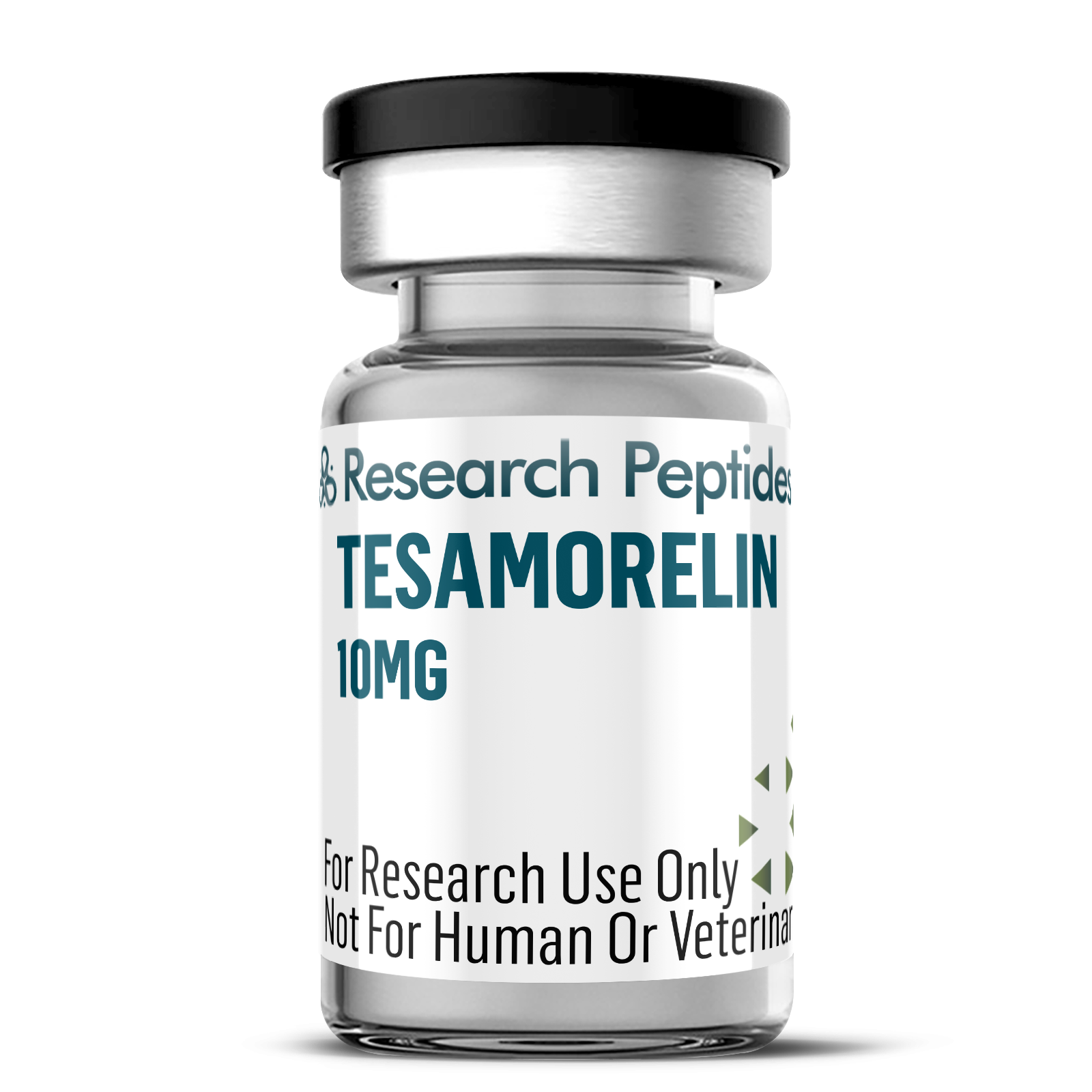
Tesamorelin 10mg
$84.99
- 1 About Tesamorelin
- 2 Tesamorelin Mechanism of Action
- 3 Tesamorelin Research Applications
- 4 Tesamorelin vs Sermorelin vs CJC-1295 (No DAC) Comparison
- 5 Tesamorelin Storage & Handling Guide (Research Use Only)
- 6 Frequently Asked Questions (FAQ)
- 6.1 What purity standard does Research Peptides maintain for tesamorelin?
- 6.2 Are Certificates of Analysis available for tesamorelin batches?
- 6.3 How is tesamorelin typically reconstituted for laboratory research?
- 6.4 What storage conditions help maintain tesamorelin stability?
- 6.5 Is tesamorelin stable in solution after preparation?
- 6.6 What makes tesamorelin useful in experimental research?
- 6.7 Why do researchers compare tesamorelin with peptides like sermorelin or CJC-1295?
- 6.8 Why is tesamorelin considered useful for studying GHRH receptor signaling pathways?
- 7 Certificate of Analysis (COA) & Quality Assurance
- 8 Scientific References
- 9 Regulatory Status & Legal Considerations (U.S.)
About Tesamorelin
Tesamorelin is a synthetic peptide analogue of growth hormone–releasing hormone (GHRH), a hypothalamic signaling peptide that regulates growth hormone secretion through the anterior pituitary [1]. Structurally derived from the active region of endogenous GHRH, tesamorelin was developed to mimic natural receptor interactions while improving stability and resistance to enzymatic degradation.
In research contexts, it is commonly examined as a model compound for studying growth hormone axis regulation and neuroendocrine signaling pathways. The peptide consists of a modified 44–amino-acid sequence related to human GHRH, with structural adjustments that enhance resistance to proteolytic breakdown compared with the native hormone. These modifications help preserve receptor-binding functionality while extending stability in experimental systems.
As a result, tesamorelin maintains the ability to engage GHRH receptors while offering a more consistent and durable structure for controlled laboratory investigation.
In experimental settings, tesamorelin is widely used to explore mechanisms within the growth hormone/IGF-1 signaling axis and broader endocrine regulatory networks. Researchers employ the peptide in receptor-binding assays, neuroendocrine pathway analysis, metabolic regulation studies, and cell-based models examining hormone signaling cascades. These research systems help investigate how GHRH receptor activation influences intracellular signaling, gene expression patterns, and downstream biochemical responses [2].
Synthetic analogues such as tesamorelin provide practical advantages for laboratory research. Compared with endogenous peptides, the engineered structure improves stability, reproducibility, and resistance to rapid enzymatic degradation, allowing more controlled experimental conditions in both in-vitro and preclinical models.
Tesamorelin Synthesis, Purification, and Quality Control
Research Peptides produces Tesamorelin using controlled peptide synthesis workflows designed to maintain structural accuracy and batch consistency. The compound is manufactured through advanced solid-phase peptide synthesis (SPPS) followed by precision purification using high-performance liquid chromatography (HPLC), allowing the final material to reach ≥99% purity suitable for laboratory research applications.
Each production batch undergoes internal analytical verification to confirm peptide identity, molecular integrity, and purity profile. Techniques such as analytical HPLC and mass spectrometry are used to validate sequence accuracy and detect potential synthesis byproducts or contaminants. This multi-step verification process helps ensure researchers receive a well-characterized peptide suitable for reproducible experimental work.
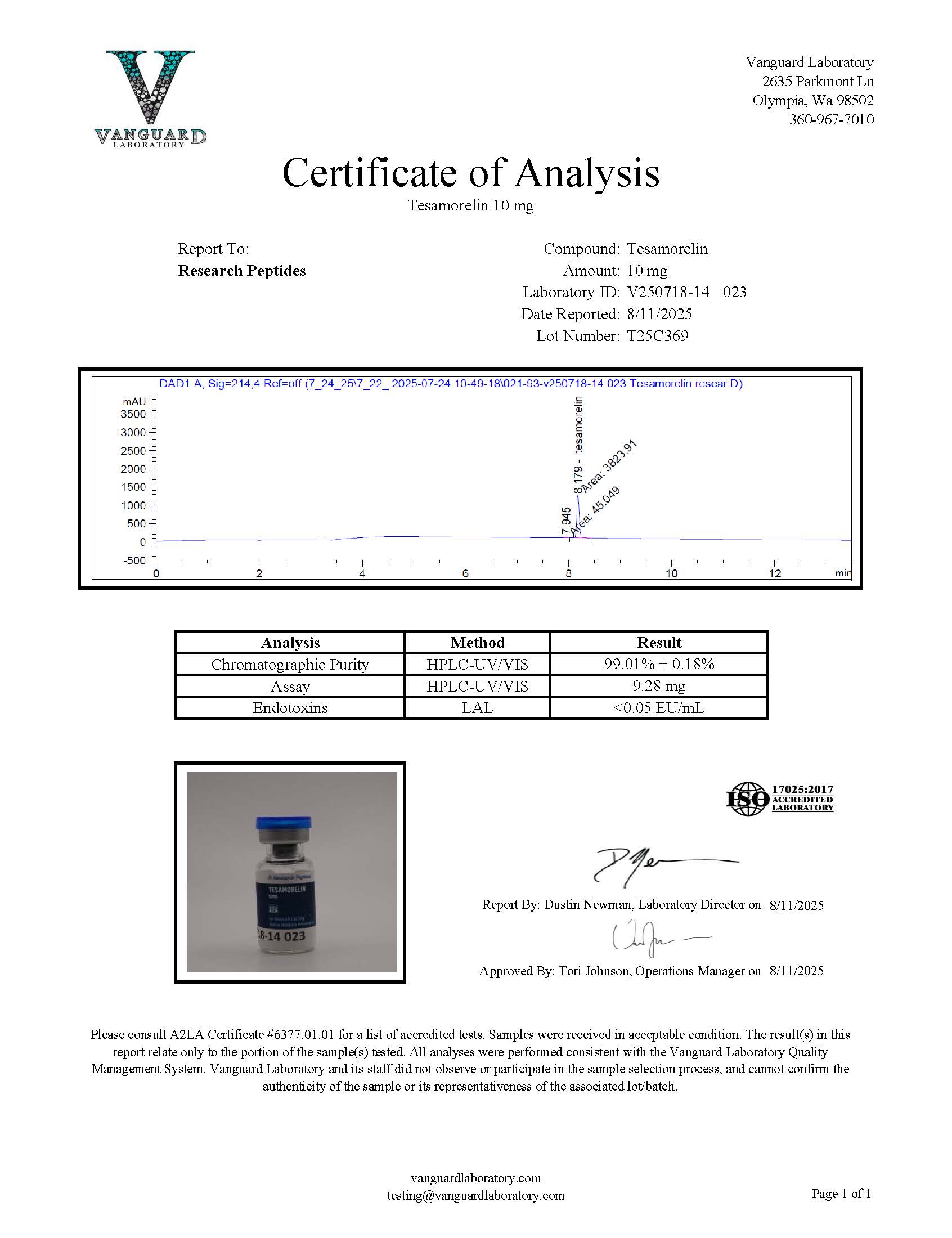
For transparency and laboratory documentation, batch-specific Certificates of Analysis (COA) are made available on the product pages with each lot. These reports provide detailed analytical data including purity confirmation, chromatographic profiles, and identity verification results. Access to this documentation allows research teams to review quality metrics before experimental use.
Combined with reliable U.S. shipping and controlled manufacturing protocols, these quality controls position Research Peptides as a dependable supplier for laboratories requiring high-purity, analytically verified peptide materials for experimental studies.
Tesamorelin Mechanism of Action
Tesamorelin is a synthetic analogue of growth hormone–releasing hormone (GHRH) that functions as a selective agonist of the growth hormone–releasing hormone receptor (GHRHR). This receptor is a class B G protein–coupled receptor primarily expressed on somatotroph cells within the anterior pituitary.
In laboratory research systems, tesamorelin is used to study receptor-mediated regulation of the growth hormone (GH) signaling axis and associated intracellular pathways. These mechanisms have been investigated in receptor-binding assays, endocrine cell cultures, and preclinical models examining neuroendocrine signaling dynamics.
Primary Target Binding and Selectivity
Tesamorelin directly binds to the extracellular domain of the GHRH receptor, initiating receptor activation through conformational changes characteristic of GPCR signaling. The peptide functions as a full agonist in many experimental systems, closely mimicking the receptor-binding characteristics of endogenous GHRH while exhibiting improved structural stability [1].
The interaction between tesamorelin and GHRHR activates heterotrimeric Gs proteins associated with the receptor. This interaction triggers downstream signaling events that regulate growth hormone secretion pathways within pituitary somatotroph cells. Because the peptide maintains structural similarity to the native ligand while incorporating stabilizing modifications, tesamorelin demonstrates strong functional selectivity toward the GHRH receptor in receptor signaling studies.
Downstream Signaling Pathways
Following receptor engagement, tesamorelin activates adenylate cyclase through Gs protein signaling. This results in elevated intracellular cyclic adenosine monophosphate (cAMP) levels, a key second messenger involved in endocrine signaling pathways. Increased cAMP subsequently activates protein kinase A (PKA), which phosphorylates transcription factors and signaling proteins involved in hormone synthesis and secretion mechanisms [2].
Activation of the cAMP/PKA pathway can also influence additional intracellular signaling networks, including the MAPK/ERK pathway. In endocrine cell culture studies, MAPK activation has been associated with changes in gene transcription and cellular responsiveness related to hormone-regulated pathways. Researchers often examine these signaling cascades to understand how receptor activation translates into coordinated intracellular responses within neuroendocrine tissues.
Functional Effects Observed in Preclinical Models
In preclinical experimental systems, tesamorelin has been observed to stimulate signaling activity within the growth hormone regulatory axis. Activation of GHRH receptors in pituitary-derived cell lines and animal models leads to measurable increases in growth hormone release and downstream signaling biomarkers linked to endocrine regulation [3].
These responses provide researchers with a model for investigating neuroendocrine feedback loops involving growth hormone and insulin-like growth factor (IGF) signaling networks. Changes in transcriptional activity, hormone secretion dynamics, and receptor sensitivity have all been explored in studies using tesamorelin as a probe for GHRH-mediated signaling pathways.
Beyond pituitary signaling, some experimental investigations have explored how modulation of the GH–IGF axis influences metabolic and cellular regulatory systems in preclinical models. These research contexts include studies of endocrine tissue communication, metabolic signaling pathways, and gene expression responses associated with hormone-regulated physiological processes.
Pharmacology-Relevant Design Features
Tesamorelin incorporates structural modifications that improve resistance to rapid enzymatic degradation compared with native GHRH peptides. Endogenous GHRH is rapidly cleaved by circulating proteases such as dipeptidyl peptidase IV (DPP-IV), which can limit its stability in experimental systems. The modified peptide structure used in tesamorelin reduces susceptibility to these degradation pathways, resulting in greater stability in biochemical assays and preclinical models [4].
This enhanced stability allows tesamorelin to maintain receptor activity for longer experimental observation periods, which can improve reproducibility in receptor signaling studies. For researchers investigating GHRH receptor pharmacology or endocrine signaling networks, the engineered stability and consistent receptor engagement of tesamorelin make it a useful experimental tool for studying growth hormone regulatory mechanisms under controlled laboratory conditions.
Tesamorelin Research Applications
Tesamorelin is a synthetic peptide analogue of growth hormone–releasing hormone (GHRH) that researchers frequently study to investigate regulation of the growth hormone (GH) axis and its downstream signaling systems. Because the peptide selectively activates the GHRH receptor (GHRHR), it provides a controlled tool for examining neuroendocrine signaling mechanisms that govern hormone secretion and endocrine feedback pathways.
As a result, tesamorelin research often focuses on receptor pharmacology, pituitary signaling biology, and molecular pathways associated with GH–IGF regulatory networks.
In experimental environments, tesamorelin is used in a variety of research systems including receptor-binding assays, endocrine cell culture models, and preclinical animal studies. Investigators frequently apply the peptide in cell-based assays involving pituitary-derived cell lines to examine how GHRH receptor activation triggers intracellular signaling cascades such as cyclic AMP (cAMP) production and protein kinase A (PKA) activation.
Through these experimental models, tesamorelin studies help clarify the molecular mechanisms linking hypothalamic signaling peptides to endocrine regulation.
Researchers also use tesamorelin peptide to investigate broader biological processes connected to growth hormone signaling, including metabolic regulation, transcriptional responses, and tissue-level endocrine communication. Molecular biology techniques such as transcriptional profiling, phosphoprotein analysis, and hormone quantification assays allow you to measure how GHRH receptor activation alters signaling networks and gene expression patterns in endocrine tissues. These approaches make tesamorelin a valuable probe for studying neuroendocrine pathway dynamics in controlled experimental systems.
Neuroendocrine Signaling and GHRH Receptor Pharmacology
A central focus of tesamorelin research involves examining the pharmacology of the GHRH receptor and its role in neuroendocrine signaling. The GHRH receptor is a G protein–coupled receptor primarily expressed on somatotroph cells of the anterior pituitary, where it mediates hypothalamic control of growth hormone secretion [2].
In receptor pharmacology studies, tesamorelin is used to investigate ligand–receptor binding dynamics, receptor activation mechanisms, and downstream intracellular signaling events. These experiments often employ pituitary cell cultures or recombinant cell lines engineered to express the human GHRH receptor. The researcher can then measure receptor activation through biochemical endpoints such as cyclic AMP accumulation assays, receptor internalization studies, and phosphorylation markers associated with GPCR signaling.
Experimental outcomes in these systems frequently include quantification of cAMP production, PKA activity, and transcription factor activation following receptor stimulation. Through these models, tesamorelin signaling pathway research helps clarify how GHRH receptor activation regulates endocrine cell behavior and hormone secretion mechanisms at the molecular level.
Growth Hormone–IGF Axis Regulation
Another major research domain involving tesamorelin studies is the regulation of the growth hormone–insulin-like growth factor (GH–IGF) axis. This hormonal signaling network coordinates communication between the hypothalamus, pituitary gland, and peripheral tissues [3].
In experimental systems, activation of the GHRH receptor by tesamorelin can stimulate growth hormone secretion from pituitary somatotroph cells. Researchers monitor these responses through hormone quantification assays, often measuring GH release in cell culture supernatants or serum samples collected from preclinical animal models.
Because growth hormone signaling influences the production of insulin-like growth factor 1 (IGF-1) in peripheral tissues, tesamorelin studies also examine how GH stimulation alters downstream endocrine signaling. Investigators may analyze IGF-related transcriptional activity, receptor signaling markers, and hormone feedback mechanisms that regulate endocrine balance [5]. These experimental approaches help researchers better understand the regulatory architecture of the GH–IGF axis and its role in systemic hormonal signaling.
Intracellular Signaling and Gene Expression Studies
Tesamorelin peptide research is also widely used to investigate intracellular signaling cascades triggered by GHRH receptor activation. When the receptor is stimulated, intracellular signaling pathways involving cAMP, PKA, and MAPK/ERK can become activated, leading to measurable changes in gene transcription and protein synthesis [2].
Researchers often explore these processes using molecular biology techniques such as RNA sequencing, quantitative PCR, and phosphoprotein analysis. These methods allow investigators to identify changes in gene expression patterns associated with GHRH receptor signaling in endocrine cells. For example, they may examine transcriptional changes related to hormone biosynthesis pathways, receptor regulation mechanisms, or cellular stress responses.
Cell culture experiments using pituitary-derived cell lines or endocrine tissue cultures are commonly used for these investigations. In these systems, researchers analyze how varying levels of receptor stimulation influence downstream signaling markers, transcription factor activity, and protein expression patterns. These observations contribute to a deeper understanding of the molecular signaling networks that govern endocrine communication.
Metabolic Signaling and Endocrine System Communication
Tesamorelin research has also expanded into broader investigations of metabolic signaling pathways influenced by growth hormone regulation. Growth hormone signaling interacts with numerous metabolic systems, including pathways involved in lipid metabolism, glucose regulation, and energy balance [6].
To explore these mechanisms, researchers often use animal-based preclinical models or metabolic cell systems to study how activation of the GHRH receptor affects endocrine signaling across multiple tissues. Experimental endpoints may include analysis of metabolic enzyme activity, gene expression markers associated with lipid metabolism, and biochemical indicators of endocrine signaling activity.
In these studies, investigators frequently examine cross-talk between the GH–IGF axis and other hormonal signaling networks. Molecular assays may measure phosphorylation markers within metabolic signaling pathways, transcriptional responses in metabolic tissues, and systemic endocrine biomarkers that reflect changes in hormone-regulated metabolic activity. Tesamorelin studies therefore contribute to a broader understanding of how neuroendocrine signaling integrates with systemic metabolic regulation.
Experimental Models in Tesamorelin Research
A wide range of experimental models are used in tesamorelin studies to investigate its biological activity and signaling effects. Cell-based assays remain one of the most common research environments, particularly pituitary cell cultures and recombinant receptor systems used to study GHRH receptor pharmacology.
Researchers also employ endocrine tissue cultures and metabolic cell models to examine downstream signaling responses and transcriptional changes. In addition, animal-based preclinical models allow investigators to evaluate systemic endocrine signaling responses and feedback mechanisms within the GH–IGF regulatory axis.
Across these experimental systems, investigators measure diverse molecular endpoints including hormone secretion levels, gene expression changes, phosphorylation markers in signaling pathways, and histological indicators of endocrine tissue activity. These approaches collectively help researchers map the complex signaling networks influenced by GHRH receptor activation.
By enabling controlled activation of the GHRH receptor, tesamorelin serves as a useful molecular probe for studying endocrine signaling systems, receptor pharmacology, and hormonal regulatory pathways in experimental research environments.
| Note: Tesamorelin supplied by Research Peptides is intended strictly for laboratory research use only and is not approved for human or veterinary use. |
Tesamorelin vs Sermorelin vs CJC-1295 (No DAC) Comparison
Researchers investigating growth hormone regulatory systems often evaluate multiple peptides that interact with the growth hormone–releasing hormone (GHRH) receptor or related endocrine signaling pathways. Comparing these compounds can help them select the most appropriate molecular tool for specific experimental objectives, such as receptor pharmacology studies, neuroendocrine signaling research, or investigations of the growth hormone–IGF regulatory axis.
The table below compares tesamorelin with CJC-1295 (No DAC) and Sermorelin, two other peptides frequently examined in related research literature. These compounds are often studied together because they interact with overlapping neuroendocrine signaling pathways or are used in similar experimental models focused on growth hormone regulation.
| Field | Tesamorelin | Sermorelin | CJC-1295 (No DAC) |
| Compound Class | Synthetic GHRH analogue | GHRH peptide fragment | Modified GHRH analogue |
| Structural Characteristics | Modified 44-amino-acid GHRH analogue with stability-enhancing substitutions | 29-amino-acid fragment derived from endogenous GHRH (GHRH 1-29) | 29-amino-acid GHRH analogue with stability-enhancing substitutions |
| Primary Biological Systems Studied | Neuroendocrine GH regulation and GHRH receptor signaling | Pituitary receptor pharmacology and GH secretion signaling | GHRH receptor signaling and GH axis regulation |
| Key Molecular Pathways Investigated | GHRH receptor activation; cAMP/PKA signaling; GH–IGF regulatory axis | GHRH receptor activation; cAMP signaling pathways | GHRH receptor activation; cAMP/PKA signaling; GH axis modulation |
| Typical Experimental Models | Pituitary cell culture assays, receptor-binding experiments, preclinical endocrine models | Somatotroph cell cultures, receptor signaling assays, endocrine tissue models | Receptor pharmacology assays, pituitary cell systems, endocrine pathway models |
| Mechanistic Research Focus | Selective GHRH receptor agonism with enhanced structural stability | Short active fragment used to study endogenous GHRH receptor activation | Modified analogue used to examine receptor signaling dynamics and peptide stability |
| Experimental Stability Characteristics | Designed for improved resistance to enzymatic degradation relative to native GHRH | Short peptide fragment with lower intrinsic stability in assay environments | Structural modifications improve stability compared with native GHRH fragments |
| Research Context Overlap | GH–IGF axis signaling, endocrine regulation research | GHRH receptor biology and pituitary signaling research | Neuroendocrine signaling and receptor pharmacology studies |
In scientific literature, tesamorelin is often used to study GHRH receptor activation and the downstream regulation of the growth hormone–IGF signaling network. Because the peptide maintains structural similarity to endogenous GHRH while incorporating modifications that improve stability, it is frequently used in tesamorelin peptide studies examining receptor-mediated endocrine signaling in cell culture and preclinical models.
Sermorelin research, by contrast, commonly uses the shorter GHRH 1-29 fragment to investigate the minimal active sequence required for receptor activation. This makes it useful for mechanistic receptor pharmacology experiments exploring ligand–receptor interactions and signaling initiation within pituitary cell systems.
Meanwhile, CJC-1295 (No DAC) research often focuses on structural peptide modifications designed to enhance stability and prolong receptor interaction in experimental systems. Studies involving this compound typically examine how structural changes influence GHRH receptor signaling dynamics and downstream endocrine pathway activation.
Together, these peptides are frequently discussed within the same research domain because they all interact with the GHRH receptor signaling pathway and are used in experimental studies investigating the regulation of the growth hormone axis.
Tesamorelin Storage & Handling Guide (Research Use Only)
Tesamorelin should be handled in accordance with standard practices for experimental compounds in professional laboratory settings. As with other synthetic research peptides, appropriate safety procedures, controlled storage conditions, and documented handling protocols are essential to preserving compound integrity and ensuring reliable experimental outcomes.
Accordingly, all preparation and use should be conducted under institutional research guidelines and established laboratory safety standards.
Standard Laboratory Handling Practices
Proper laboratory handling helps prevent contamination, maintain peptide stability, and support safe laboratory operations during experimental work.
Recommended handling practices include:
- Follow institutional standard operating procedures (SOPs) and laboratory research protocols when handling peptide compounds.
- Use appropriate personal protective equipment (PPE) including laboratory coats, gloves, and eye protection.
- Handle peptide materials within engineering controls such as fume hoods or biosafety cabinets when preparing solutions.
- Use sterile tools, pipettes, and calibrated laboratory equipment when reconstituting or aliquoting peptides.
- Avoid direct contact between the peptide and non-sterile surfaces during preparation.
- Clearly label all aliquots and working solutions with compound name, concentration, preparation date, and lot number.
Consistent adherence to standardized handling procedures helps reduce contamination risk while supporting reproducible experimental conditions across laboratory studies.
Storage Guidelines for Compound Stability
Environmental factors such as temperature, moisture exposure, and light conditions can influence peptide stability and affect experimental reliability.
General storage recommendations include:
- Store lyophilized tesamorelin at −4°F (−20°C) for long-term storage stability.
- After reconstitution, store solutions under refrigerated conditions at 36–46°F (2–8°C) when used in short-term experimental preparations.
- Protect lyophilized peptide vials from moisture exposure by maintaining sealed containers and using desiccants where appropriate.
- Minimize repeated freeze–thaw cycles by preparing small aliquots for experimental use.
- Avoid prolonged exposure to direct light or elevated temperatures during handling or storage.
Maintaining controlled storage conditions helps preserve peptide structure and supports consistent experimental performance across research applications.
Compound-Specific Stability and Reconstitution Considerations
As a peptide analogue of growth hormone–releasing hormone, tesamorelin shares stability characteristics common to many synthetic peptides used in laboratory research. Peptide integrity may be influenced by environmental conditions and preparation methods.
Important considerations include:
- Tesamorelin may gradually degrade in aqueous solution over extended periods, so freshly prepared solutions are typically preferred for experimental use.
- Reconstitution is commonly performed using sterile water for injection or bacteriostatic water, added slowly to the vial to avoid excessive agitation.
- Gentle swirling rather than vortex mixing is recommended to reduce the potential for peptide denaturation or aggregation.
- Maintaining cold storage conditions after reconstitution can help slow degradation processes that occur in aqueous peptide solutions.
Understanding these stability characteristics allows researchers to design preparation and storage protocols that support reliable peptide handling during experimental studies.
Documentation and Material Traceability
Accurate documentation and traceability practices are essential components of controlled laboratory research involving peptide materials.
Researchers should maintain clear records, including batch numbers and lot identifiers for each peptide vial used in experiments as found in Certificates of Analysis (COAs). It’s also good practice to document reconstitution procedures, solvent systems, and preparation concentrations, as well as any other laboratory records that link experimental data to specific material lots.
Proper documentation supports experimental reproducibility and ensures traceability for research oversight and institutional compliance.
This compound is supplied strictly for laboratory research use only and is not intended for human or veterinary use. Research Peptides does not provide medical, diagnostic, or therapeutic guidance.
Frequently Asked Questions (FAQ)
What purity standard does Research Peptides maintain for tesamorelin?
Tesamorelin supplied by Research Peptides is produced to a ≥99% purity standard, verified through high-performance liquid chromatography (HPLC). Each production batch also undergoes internal analytical testing that may include mass spectrometry identity confirmation and chromatographic purity analysis. These verification steps help ensure researchers receive a well-characterized peptide suitable for receptor signaling studies, endocrine pathway experiments, and other controlled laboratory investigations.
Are Certificates of Analysis available for tesamorelin batches?
Yes. Research Peptides provides batch-specific Certificates of Analysis (COAs) documenting analytical testing performed on each lot of tesamorelin. These reports typically include purity data, chromatographic profiles, and identity verification results. COAs allow researchers to confirm analytical specifications before experimental use and support laboratory documentation practices, material traceability, and reproducibility when tesamorelin is used in signaling pathway or neuroendocrine research.
How is tesamorelin typically reconstituted for laboratory research?
Tesamorelin is supplied as a lyophilized peptide powder, which researchers commonly reconstitute using sterile laboratory solvents such as sterile water or bacteriostatic water. The solvent is usually introduced slowly along the vial wall and dissolved with gentle swirling rather than vigorous agitation. This approach helps maintain peptide integrity and supports consistent preparation of working solutions used in receptor pharmacology or endocrine signaling studies.
What storage conditions help maintain tesamorelin stability?
Lyophilized tesamorelin is generally stored at −4°F (−20°C) for long-term stability in research laboratories. Once reconstituted, solutions should be kept under refrigerated conditions at 36–46°F (2–8°C) and used within a defined experimental timeframe. Researchers typically minimize repeated freeze–thaw cycles by preparing small aliquots, which helps preserve peptide structure and maintain consistent experimental performance.
Is tesamorelin stable in solution after preparation?
Like many research peptides, tesamorelin may gradually degrade when maintained in aqueous solution for extended periods. For this reason, investigators often prepare working solutions shortly before use and store them under refrigerated conditions when necessary. Controlled storage conditions and careful handling help maintain peptide integrity in experiments examining tesamorelin signaling pathways and growth hormone receptor activation.
What makes tesamorelin useful in experimental research?
Tesamorelin is frequently used as a molecular tool for studying growth hormone–releasing hormone (GHRH) receptor signaling and the broader growth hormone–IGF regulatory axis. In laboratory research, the peptide helps investigators examine how GHRH receptor activation influences intracellular signaling pathways, hormone secretion dynamics, and transcriptional responses in endocrine cell systems and preclinical neuroendocrine models.
Why do researchers compare tesamorelin with peptides like sermorelin or CJC-1295?
Tesamorelin is often studied alongside related GHRH analog peptides such as sermorelin and CJC-1295 because these compounds interact with similar neuroendocrine signaling pathways. Comparative tesamorelin peptide studies help researchers investigate how structural differences between GHRH analogues influence receptor activation, peptide stability, and signaling dynamics in endocrine research models.
Why is tesamorelin considered useful for studying GHRH receptor signaling pathways?
The peptide maintains structural similarity to endogenous growth hormone–releasing hormone while incorporating modifications that enhance stability in experimental systems. This combination allows tesamorelin to activate the GHRH receptor signaling pathway in controlled laboratory environments while remaining resistant to rapid enzymatic degradation. As a result, researchers frequently use tesamorelin research models to examine receptor pharmacology and neuroendocrine signaling mechanisms.
Certificate of Analysis (COA) & Quality Assurance
Each lot of tesamorelin supplied by Research Peptides is accompanied by a Certificate of Analysis (COA) to support traceability and laboratory documentation. For a synthetic research peptide such as tesamorelin, this record provides batch-level reference data that can be used to confirm identity, purity, and material characteristics before experimental use.
Analytical verification is performed prior to release for distribution so that researchers have access to documented quality information associated with the specific lot received. These records help support transparency and reproducibility in research workflows where batch consistency and material traceability are important.
The Certificate of Analysis serves as a reference record of the analytical testing performed during quality evaluation. A typical Certificate of Analysis for research compounds may include the following analytical information:
- Identity confirmation using mass spectrometry or comparable analytical methods appropriate for peptide verification
- Purity analysis performed using high-performance liquid chromatography (HPLC) or similar chromatographic techniques
- Molecular weight verification and related structural characterization data
- Physical description of the material, including appearance of the lyophilized peptide powder
- Batch identification details such as lot number, test date, and analytical methods used during review
- Documentation of internal laboratory verification procedures associated with quality evaluation
Maintaining COA records helps researchers preserve accurate laboratory documentation and supports traceability of experimental materials across projects, assays, and stored inventory. It also allows verification of the analytical testing linked to each batch, which can be useful for reproducibility and internal research recordkeeping.
Certificates of Analysis are available in PDF format and may be viewed on the product page or provided upon request. This allows researchers to review the analytical documentation associated with a given tesamorelin lot before or during experimental use.
Scientific References
- Physiology, Growth Hormone. Gill A, Vasavada MM. StatPearls. 2023;Not listed. Publication date: 2023. https://www.ncbi.nlm.nih.gov/books/NBK539124/
- Growth Hormone-Releasing Hormone Receptor (GHRH-R) and Its Signaling. Halmos G, Szabo Z, Dobos N, Juhasz E, Schally AV. Reviews in Endocrine and Metabolic Disorders. 2025;26(3):343-352. Publication date: 12 Feb 2025. https://doi.org/10.1007/s11154-025-09952-x
- Safety and Metabolic Effects of Tesamorelin, a Growth Hormone-Releasing Factor Analogue, in Patients with Type 2 Diabetes: A Randomized, Placebo-Controlled Trial. Clemmons DR, Miller S, Mamputu JC. PLOS ONE. 2017;12(6):e0179538. Publication date: 15 Jun 2017. https://doi.org/10.1371/journal.pone.0179538
- Growth Hormone and Tesamorelin in the Management of HIV-Associated Lipodystrophy. Bedimo R. HIV/AIDS – Research and Palliative Care. 2011;3:69-79. Publication date: 10 Jul 2011. https://doi.org/10.2147/HIV.S14561
- The Growth Hormone Releasing Hormone Analogue, Tesamorelin, Decreases Muscle Fat and Increases Muscle Area in Adults with HIV. Adrian S, Scherzinger A, Sanyal A, Lake JE, Falutz J, Dubé MP, Stanley T, Grinspoon S, Mamputu JC, Marsolais C, Brown TT, Erlandson KM. Journal of Frailty & Aging. 2019;8(3):154-159. Publication date: 2019. https://doi.org/10.14283/jfa.2018.45
- Growth Hormone Releasing Hormone Reduces Circulating Markers of Immune Activation in Parallel with Effects on Hepatic Immune Pathways in Individuals with HIV Infection and Nonalcoholic Fatty Liver Disease. Stanley TL, Fourman LT, Wong LP, Sadreyev R, Billingsley JM, Feldpausch MN, Zheng I, Pan CS, Boutin A, Lee H, Corey KE, Torriani M, Kleiner DE, Chung RT, Hadigan CM, Grinspoon SK. Clinical Infectious Diseases. 2021;73(4):621-630. Publication date: 16 Aug 2021. https://doi.org/10.1093/cid/ciab019
Regulatory Status & Legal Considerations (U.S.)
Tesamorelin is supplied strictly for laboratory research use only. This material is not approved by the U.S. Food and Drug Administration (FDA) for medical, diagnostic, or therapeutic use. It is intended solely for use by qualified professionals in controlled laboratory environments conducting in vitro studies, analytical testing, or preclinical research.
This product is not sold as a drug, dietary supplement, or food product, and it is not intended for human or veterinary use. Researchers and purchasing institutions are responsible for ensuring that all handling, storage, and experimental use of this compound complies with applicable federal, state, and institutional regulations governing laboratory research materials.
Additional information
| CAS | 218949-48-5 |
|---|---|
| PubChem CID | 44200877 |
| Molecular Weight | 5135.86 g/mol |
| Amino Acid Sequence | trans-3-hexenoyl-Tyr-Ala-Asp-Ala-Ile-Phe-Thr-Asn-Ser-Tyr-Arg-Lys-Val-Leu-Gly-Gln-Leu-Ser-Ala-Arg-Lys-Leu-Leu-Gln-Asp-Ile-Met-Ser-Arg-Gln-Gln-Gly-Glu-Ser-Asn-Gln-Glu-Arg-Gly-Ala-Arg-Ala-Arg-Leu-NH2 |
| PubChem Link | |
| Product Note | For laboratory use only. Not for human or veterinary use. Proper handling and storage (-20°C) are required to maintain stability. Ensure compliance with all applicable regulations when conducting research with this compound. Peptides will arrive in a lyophilized (powder) form for maximum stability. |